Here’s a very old joke, attributed to the author Kurt Vonnegut:
“To be is to do” – Socrates
“To do is to be” – Sartre
“Do be do be do” – Sinatra.
Culture can involve active participation, or it can be something we experience passively. Culture can educate but it can also be pure entertainment.
5 November 2024
However, there’s more to it than this. Culture isn’t only about the arts or leisure. It taps into a sense of being. Culture should make us feel something. Our culture is who we are. Consequently, it’s also about belonging, which makes it a close relation to place.
In the built environment, increasingly culture and place come packaged as partners. But are they an old married couple or newlyweds — should we expect them to have an intuitive relationship, or do they need time to get to know each other better?
People like to talk about culture and place — developers, local authorities, planners, strategists — but often in ways that risk over-simplifying this relationship. Culture risks becoming just another buzzword in the built environment’s expanding vocabulary (this is already happening to placemaking).
How do we define culture in a placemaking context, or should we even try? The problem is that culture isn’t just one thing or set of things. Nor is it always tangible or easily measurable.
So, at the risk of opening a can of worms, let’s explore the different ways in which culture operates and interacts with placemaking.
What is culture anyway?
It makes sense to start with how we define culture. This isn’t easy. Culture is a slippery term. The solution to this slipperiness seems to be to turn culture into a label and a commodity. So, when we think of culture, we tend to think of tangible products — films, theatre, television, books, music etc. Here, culture is very much about the experience and the activity that facilitates it.
More profoundly and deeply, culture feeds into a collective and individual sense of identity. Our culture helps us see ourselves.
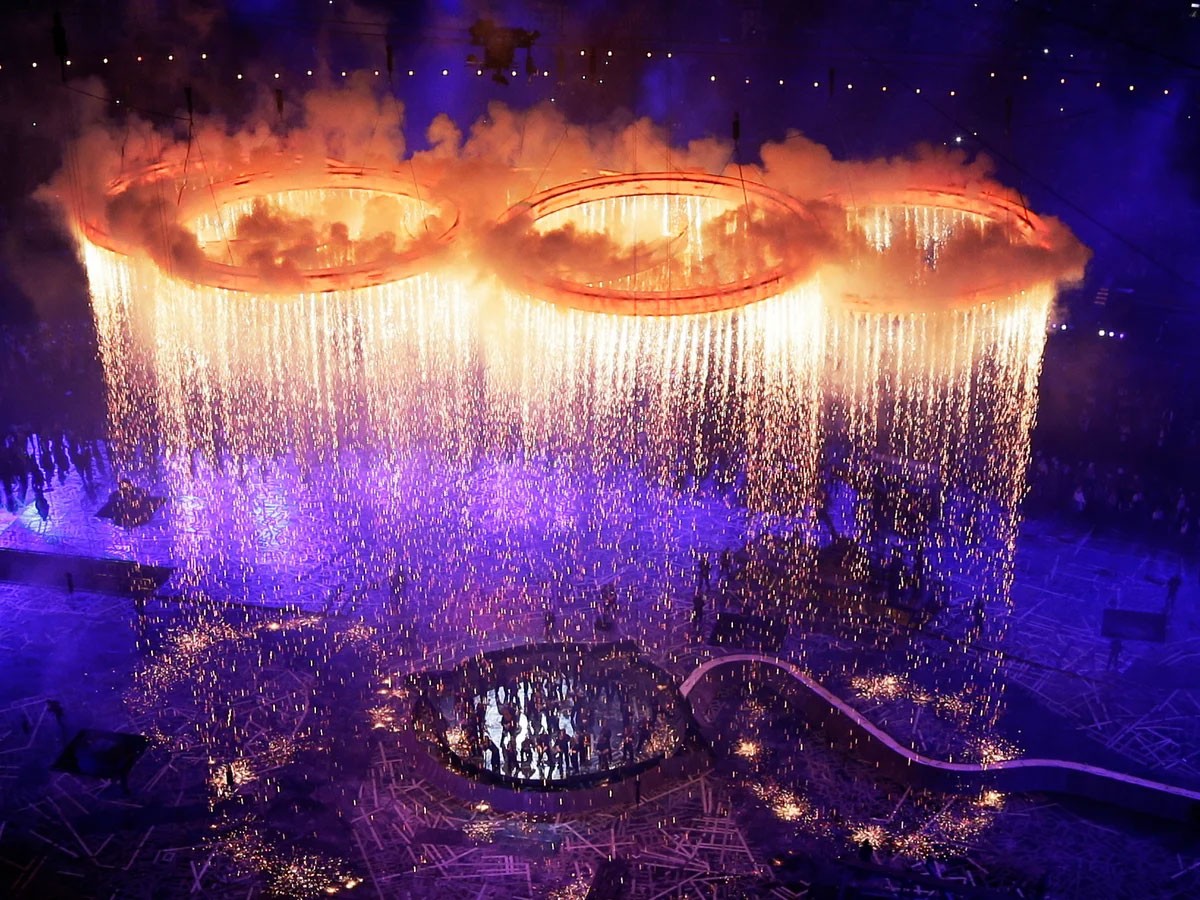
The opening ceremony of the London 2012 Olympics, directed by Danny Boyle, was crammed with long-established British cultural touchstones and references: the NHS, the Industrial Revolution, James Bond etc.
The problem with this use of culture is how it can hold up a distorted mirror, so that something like the NHS is venerated more for its historical significance than its declining reality.
This challenge exists at a local level too. Much culture-driven regeneration is based on heritage, whether historical, industrial or both, and how to repurpose it. The question for placemakers is whether these kinds of cultural connections are enough to support an enduring sense of belonging.
It may be that the thing that makes culture so potent as a placemaking component is its very ordinariness, when it’s focused on the day-to-day lived experience of communities.
It’s vital to find common ground, so that everyone who’s either involved in, or impacted by, a specific project or scheme, can agree with what culture means to them in context — if people are expecting a youth centre and you deliver an artisan bakery, you’re not meeting their cultural needs.
To paraphrase a well-known proverb, the road to placemaking hell is paved with good intentions.
One of these was the National Centre for Popular Music in Sheffield. It arose from a council-driven masterplan for culture-led regeneration in the 1980s. By the time the scheme was underway in 1996, it had become an eye-catching modernist design by architects Branson Coates, drawing inspiration from a pinball machine.
Unfortunately, not long after opening in 1999, the completed centre was soon faltering. Basically, it couldn’t attract the sort of visitor numbers it needed to meet its massive development costs. Despite being an impressive structure, it failed to connect with its public.
The same was true of the Millenium Dome, until it was repurposed simply as a large venue. Meanwhile, in Manchester, the architecturally impressive Urbis building, opened in 2002, also failed in its original purpose as a museum of urban life. It achieved much greater success later as the new home of the National Football Museum.
Culture and place should be natural partners, but it’s not always a sure-fire bet. These examples highlight the challenges of a more top-down approach to culture-led regeneration.
When culture goes local
In 2017, the Local Government Association published a collection of case studies about the role of culture in placemaking. The foreword to this publication refers to “using cultural activities to bring about positive changes” to places.
These approaches are very much local and council-led and, according to the LGA, demonstrate placemaking in action.
The LGA’s case studies include the Experience Barnsley museum, the regeneration of Margate Old Town, and community engagement and cultural activity in Stoke-on-Trent in collaboration with British Ceramics Biennial.
These are projects that focus on activity as a way of engendering or strengthening a sense of place. They are about “doing” culture.
These examples suggest there’s a kind of cultural placemaking formula you can adapt and apply:
Identify the prominent cultural characteristics of your chosen locality
Consult with local communities about these characteristics
Draw up a plan that will enable communities to participate in relevant cultural activities
Execute the plan.
Obviously, it’s not as simple as this, but cultural placemaking strategies do tend to see culture as something people can do, and the more they do it, the more likely you’ll then see successful placemaking.
You can appreciate the advantages of this approach:
It’s locally relevant and geographically defined
It’s respectful of heritage and local history
It involves tangible places and activities
Its success is measurable in terms of visitor or user numbers.